
 Monitoring
Detect, Verify, Intervene: How Child Safety Apps Should Work
Detect, verify, intervene — the three-step model that separates a safety tool from a control panel. Detection without verification is an alarm with no reason; verification without intervention is a parent who knows and can do nothing; intervention without detection is always too late. Most apps stop at the first or second step and call it “parental control”.
Step 1 — detect: what is worth an alert
Four detectors work on the child’s phone: sounds and conversations around the child, texts in any messenger, geofence violations explained by AI, and bullying patterns in a school chat. Each produces a threat score from 0 to 10, and the parent sets the threshold. The point of this step is silence: a detector that fires ten times a day is not a detector, it is noise.
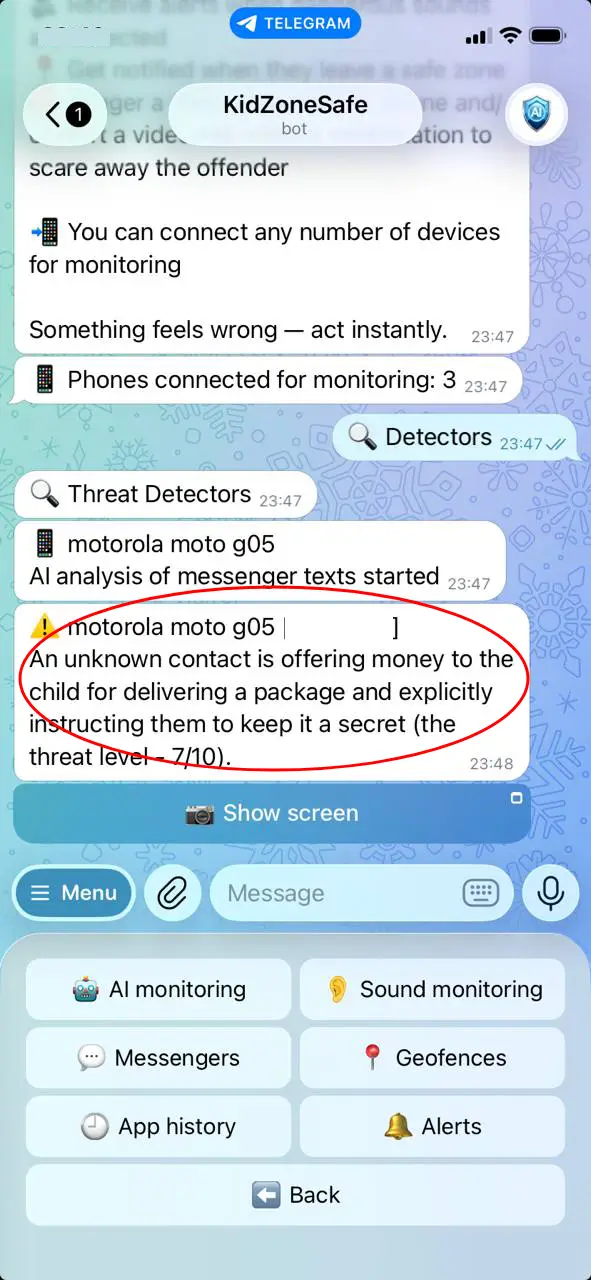
Step 2 — verify: see, do not guess
A score is a hypothesis. Verification turns it into a fact: the live screen shows what the child sees, the camera shows the room, the microphone shows who is talking. Without this step the parent has to choose between ignoring the alert and panicking — both are wrong.
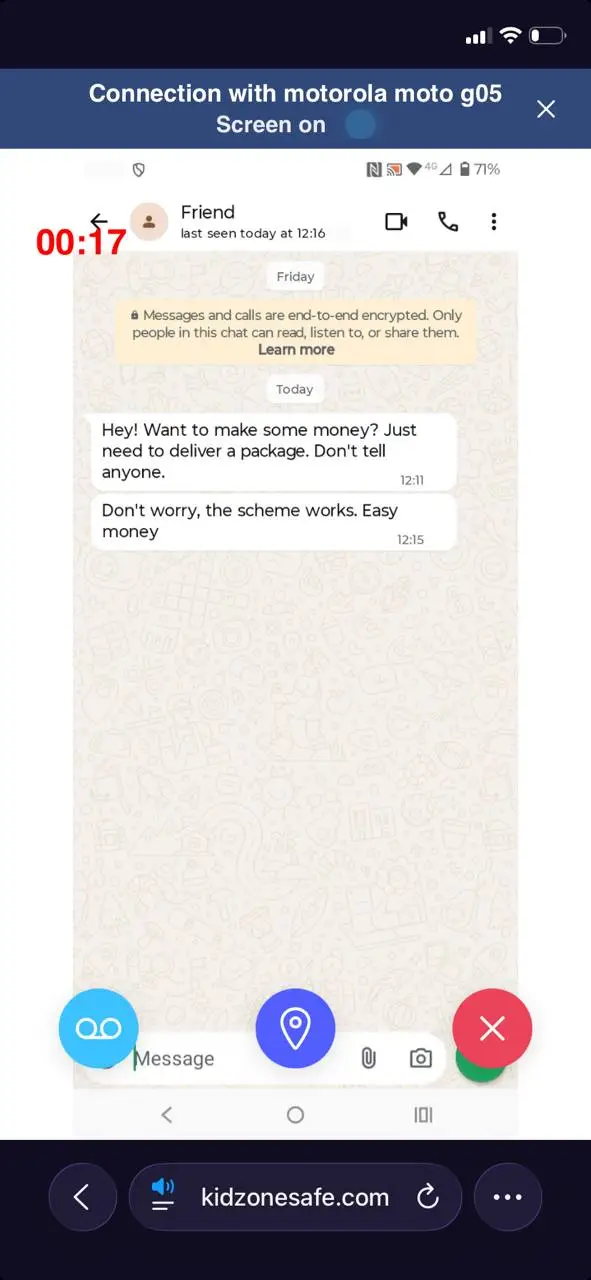
This is also where most apps fail: they verify by log — a report of what happened yesterday. A log answers “what happened”, not “what is happening now”, and by the time it is read the situation is over.
Step 3 — intervene: the adult must be present
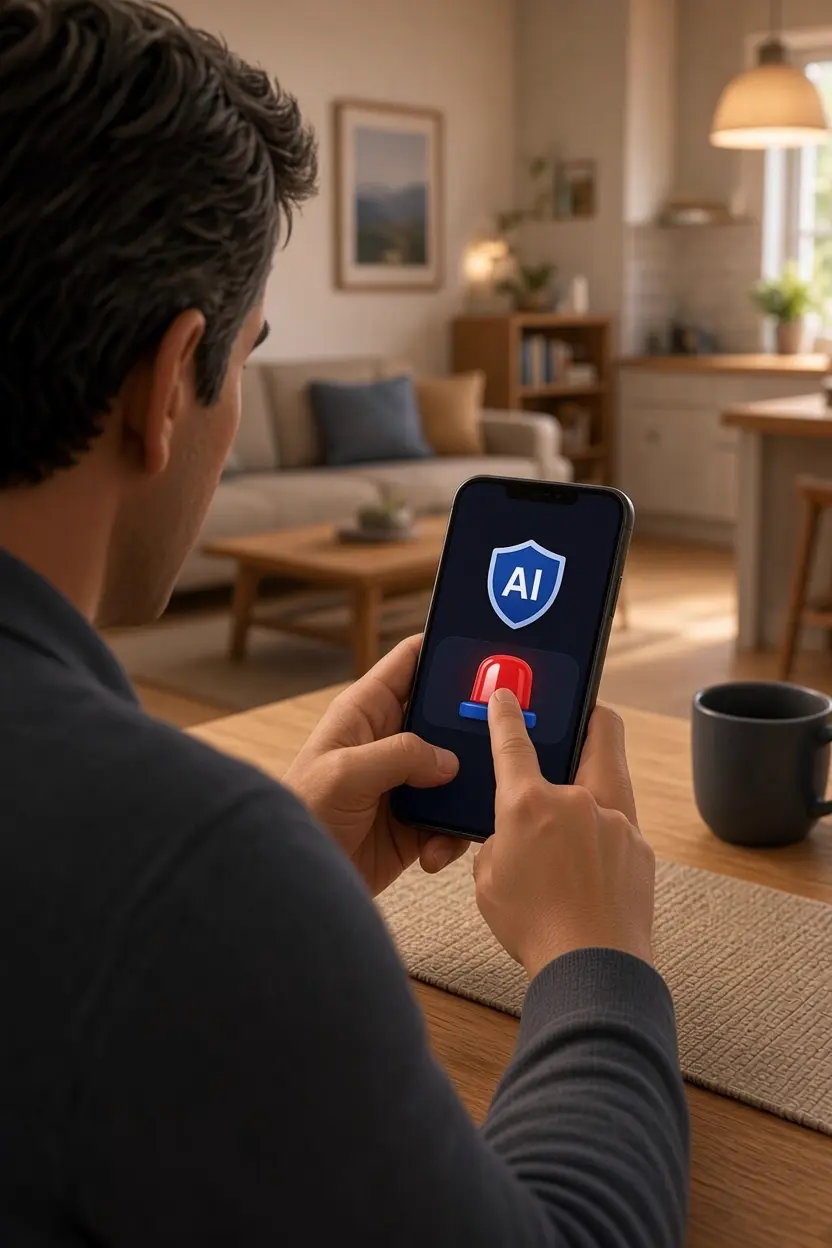
Intervention is not a message “please stop”. It is the parent’s voice through the child’s speaker, a siren to draw attention, and a log with time, place, threat level and the fragment that triggered the alert — ready to send to the police. In a real threat a child cannot press an SOS button, so the connection does not wait for an answer.
One incident, step by step
- 22:41 — a message pattern in a messenger (pressure, then a demand for secrecy): score 7/10.
- 22:41 — alert in Telegram with the score and the reason.
- 22:42 — the parent opens the live screen and sees the chat as the child sees it.
- 22:43 — decision: talk now, block the contact, or open Intervene mode.
- 22:45 — the fragment and the log are saved; if needed they go to the police.
Four minutes from signal to an adult in the situation. Compare with a weekly report: same incident, discovered on Sunday.
How this differs from “monitoring”
Monitoring is step 2 only. It is useful — but it creates a job for the parent: watch everything, forever. The three-step model reverses it: the system watches, the parent acts when there is a reason. The United Nations’ guidance on online safety for children and StopBullying.gov’s note that bystanders often see it first point to the same thing: the response matters more than the record.
Where the model breaks (and what to do about it)
- False positives — manage with the threshold, not by turning the detector off.
- Missed cases — no detector knows everything; use several, plus the conversation with the child.
- Trust — an agreement about when live access is used is part of the model, not a formality.
Common questions
Which step is the most important? None alone: the value appears only in the chain. If you must choose where to start, start with detection plus verification — an alert you cannot check breeds panic.
Is this surveillance? Surveillance has no third step. Here the goal is not a history of the child’s day, it is one adult in one dangerous moment.
Where do I read the details of the detectors? In what an AI parental control app really detects and parental control vs child protection.