
 Monitoring
Child Mocked at School: What to Do, Step by Step
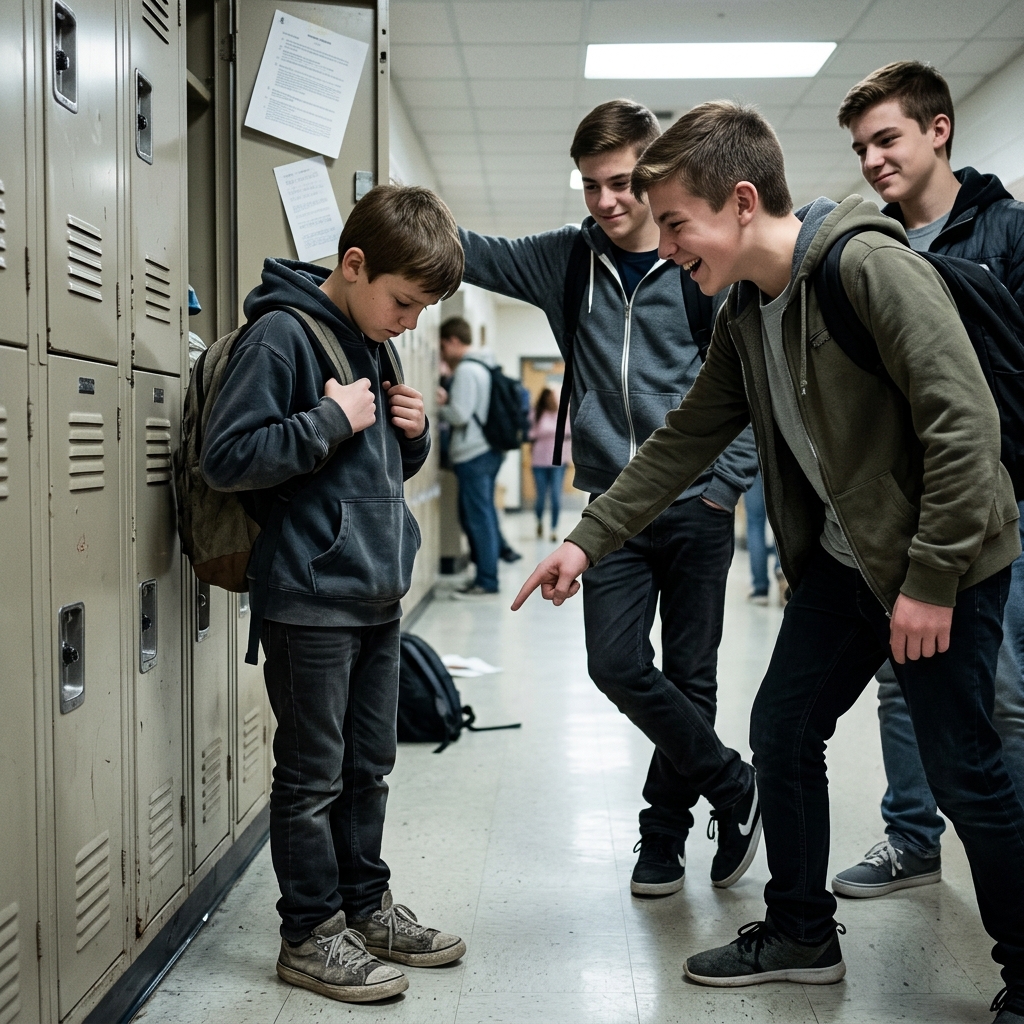
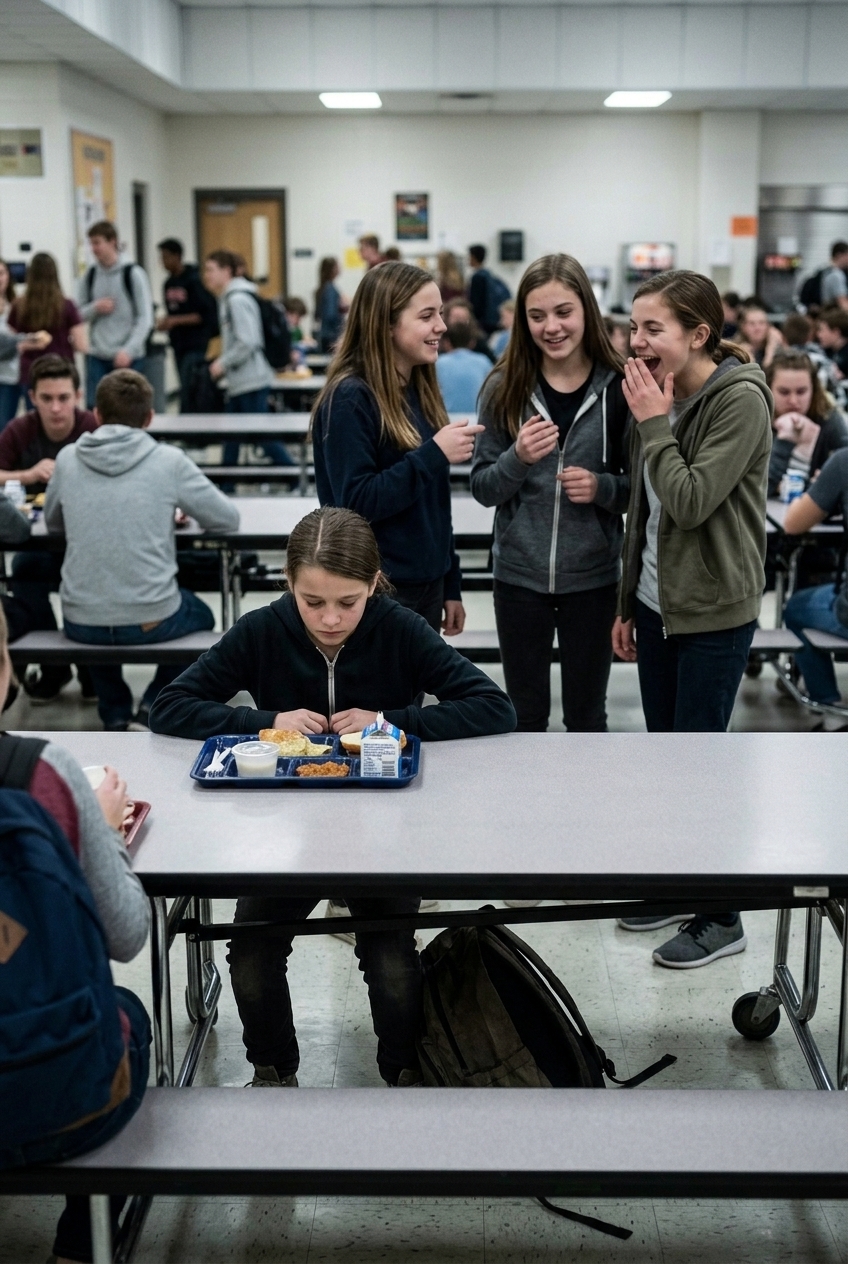
A child who is mocked at school needs three things within 24 hours: to be believed, to see that an adult has a plan, and to stop being alone with it. Mocking — laughing at clothes, whispering behind a back, “jokes” that repeat every day — is bullying even without bruises, and it damages sleep, grades and the wish to go to school. Below: exactly what to do first, what to demand from the school in writing, and where technology honestly helps — and where it does not replace a conversation.
Why “just ignore it” makes it worse
Telling a child to ignore it puts the whole burden on the child and tells the group that nobody will react. Mocking works as a ritual: the group repeats what gets laughs. That is why the reaction has to come from an adult — and it has to be visible, not silent.
Source: eSafety Commissioner (Australia) — Cyberbullying: a guide for parents and carers.
The first 24 hours: five steps you can actually do
- Listen without an interrogation. “Tell me what happened, from the beginning” works better than “why didn’t you say anything?”.
- Name it. Say plainly: “This is mocking, and it is not your fault.” A child often thinks they are the problem.
- Write down the facts. Date, place, who, what exactly was said, who saw it. Facts are what schools and, if needed, police respond to — not emotions.
- Do not confront the other children yourself. It usually moves the bullying into a hidden form and makes your child “the one who told”.
- Contact the school the same day and ask for a written response (see below).
What to ask the school for — in writing
Ask for four things in a message, not in a corridor conversation: a record of the incident, the school’s anti-bullying policy in force, a named person responsible for the follow-up, and a date when you will be told what changed. A written request changes the status of the case: the school can no longer say “we did not know”.
What KidZoneSafe does: it hears what adults do not
The bullying happens in the ten minutes between lessons, when no adult is standing nearby. The AI detector of sounds and conversations runs on the child’s phone during the hours you set: it scores what it hears around the child — shouting, a group laughing at one person, insults, a crying child — from 0 to 10, and sends an alarm only when the score crosses the threshold you chose. The alarm is not proof: you open the camera and microphone of the child’s phone one way, see and hear the situation yourself, and only then decide what to do. If the situation is acute — the child is surrounded, pushed, cornered — Intervene mode puts your voice into the child’s phone at full volume and can turn on the siren, without the child pressing anything. Everything is logged: time, place, threat level and a short audio fragment, which the school or the police accept as a report.
Live access to the camera and microphone on the child’s phone is provided by the Environment Control app: install it on the child’s device from the download page and link it to the parent account. Apart from camera streaming, the app is practically invisible in daily use: when you stream from the cameras with the display off, the display stays off; the app icon can be hidden, and the green camera indicator can be hidden as well. This exists for cases where you do not want the child or a malicious person to delete the app.
How to talk to a child who says “it’s fine”
Do not insist on a full story in one evening. Ask about the details of the day, not about the conflict: who sits next to them, what happens at the break, which lesson they want to skip. A child who is mocked often stops naming the reason — “I just don’t like it there” is a signal, not an answer.
What not to do
- Do not post about the situation on social media — the child becomes recognisable and the conflict public.
- Do not demand “hit back” — it turns the child into the one who started the fight.
- Do not promise “I will sort it out quietly”: if the school is not involved in writing, nothing changes.
What KidZoneSafe cannot do
It does not read minds and does not recognise faces. It does not tell you that a child is being mocked because of sneakers — it tells you that an aggressive conversation is happening right now, and you decide. There can be false alarms: a loud game sounds like a shout. And it never replaces the school’s duty of care: the detector tells you where to look, the school must act.
Common questions
Is this “recording other people’s conversations”? No. The audio fragment is kept only when a detector fires, and the app is installed on your own minor child’s phone, with the child informed that protection is on.
What if the child says “you’re spying on me”? Say it directly: this is not about control, but about the ten minutes between lessons when nobody sees anything. In signs your child is being bullied and how to stop bullying in real time the same rule applies: verify first, then act.
Where is the whole model? In how sound analysis works and what Intervene mode does.
Sources
- eSafety Commissioner (Australia) — Cyberbullying: a guide for parents and carers
- StopBullying.gov (U.S. government) — What is cyberbullying
- UNICEF — Cyberbullying: what it is and how to stop it